Consolidated cloud onboarding
A multi-release initiative to modernize IBM Cloud’s service onboarding by consolidating a fragmented, two-tool experience into a single modern platform. The work unified previously siloed workflows, retired costly legacy infrastructure, and improved the platform’s compliance posture. The result: ~$45K in monthly savings, a measurable increase in onboarding velocity, and a more self-sufficient partner ecosystem — with 3rd party ISV onboarding contributing $15M in platform revenue.
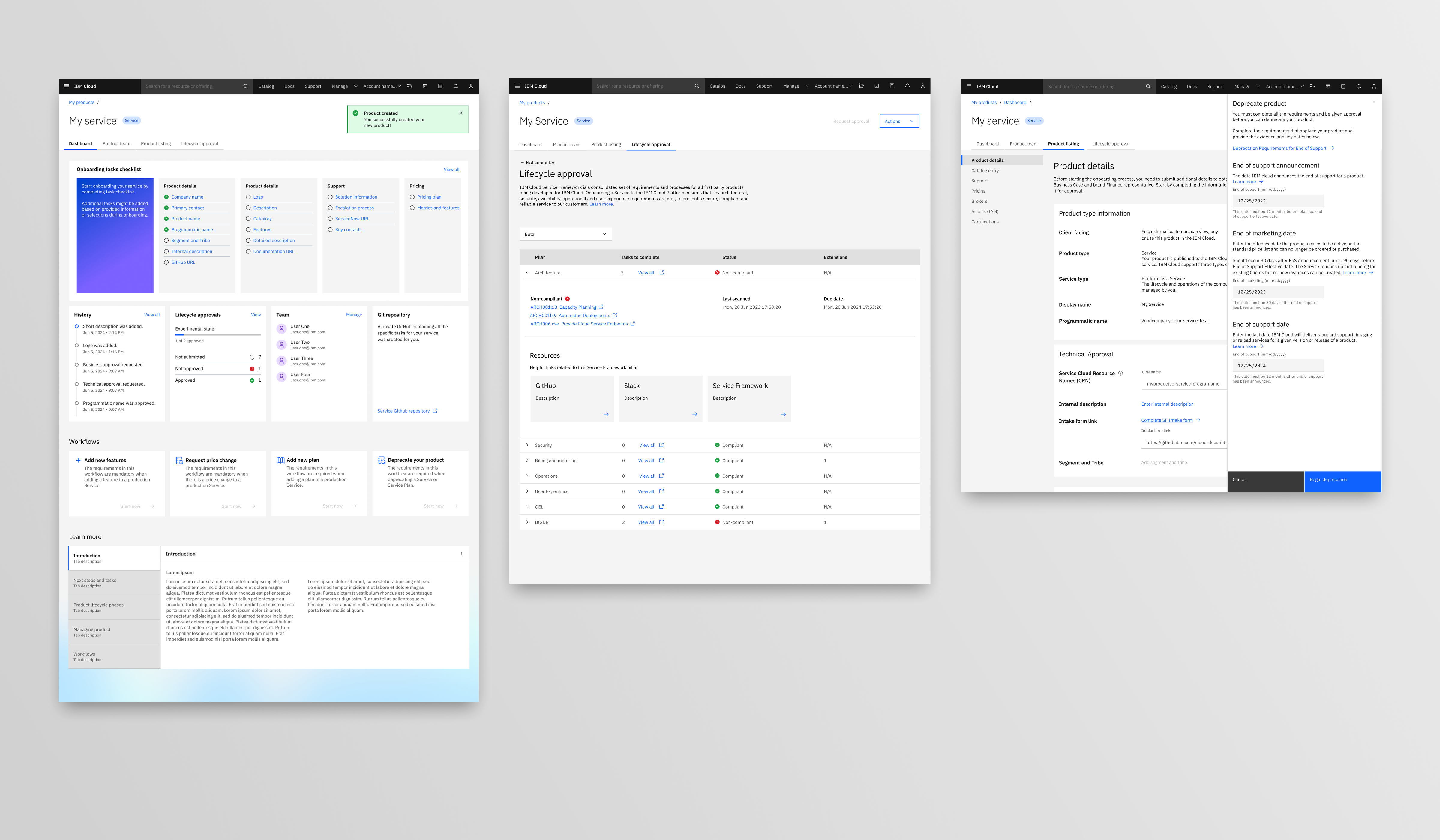
Key screens from the redesigned Partner Center UI.
Senior Product Designer, co-leading design
3 years (multi-phase migration)
2 product managers, 4 rotating designers, 6+ engineers, Ecosystem offering managers, Service Framework focals, Catalog management engineers
As a Senior Product Designer, I led the design for the unified onboarding experience — spanning UX, visual design, prototyping, and user testing. I documented existing workflows, aligned requirements with SMEs, and designed foundational patterns across the dashboard, lifecycle approvals, IAM flows, navigation, and information architecture. I collaborated with offering management, research, SMEs, and engineering to ensure functional parity, improved usability, and a clear path to retiring the legacy tool.
When I joined the onboarding modernization effort, IBM Cloud’s onboarding experience was effectively split in half. First-party teams used an aging legacy tool tied to costly infrastructure, and third-party teams used a more modern system that was missing key functionality for certain product types. For years, product teams navigated these two worlds with little visibility of system status, confusing requirements, and outdated docs.
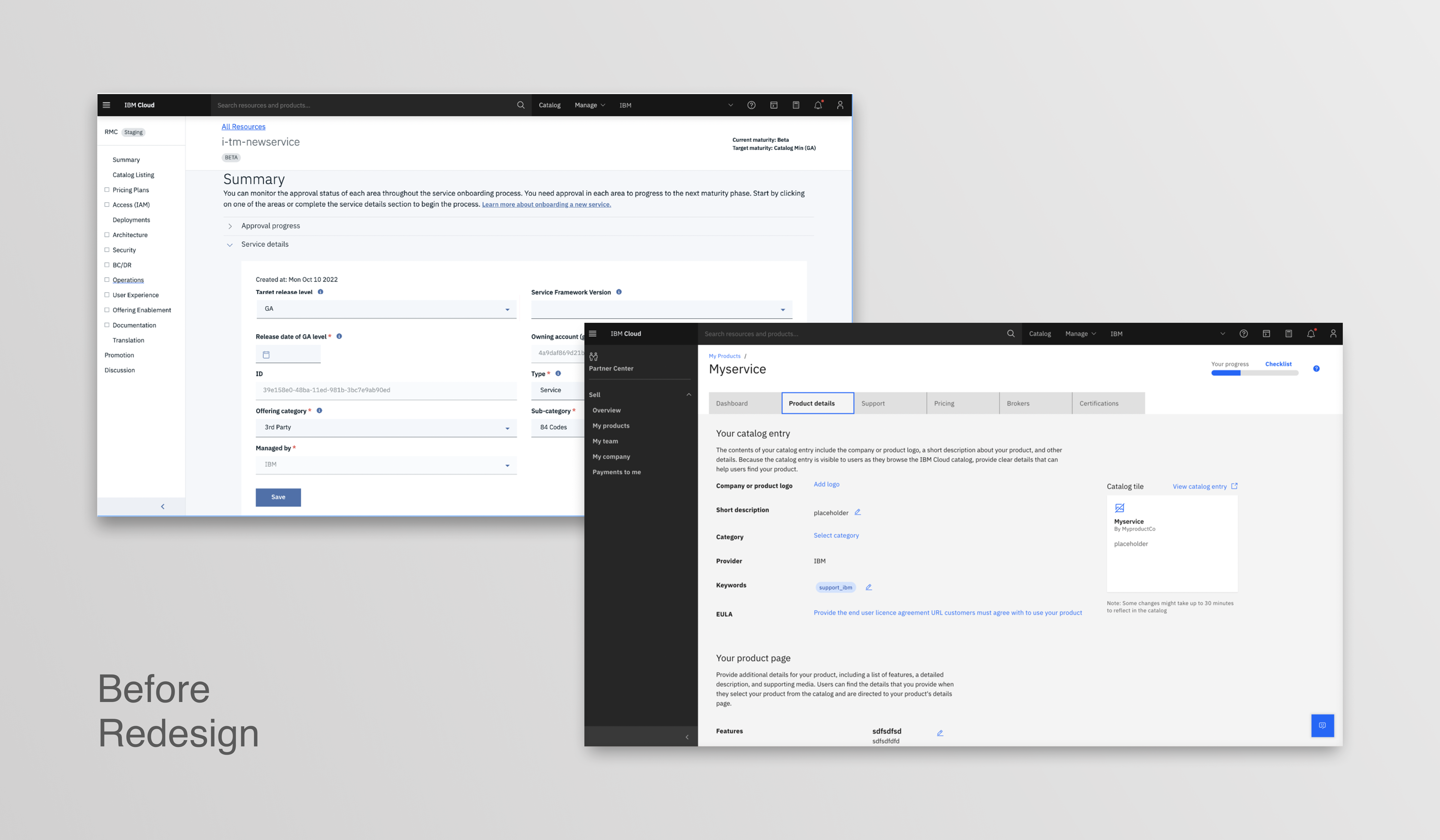
RMC and Partner Center before the redesign. Both UIs were using outdated design system assets.
The fragmentation was noticeable. New services stalled during approval cycles and teams struggled to understand what needed to happen next. And for some service owners, the onboarding process itself was intimidating enough to reconsider whether they wanted to publish on IBM Cloud at all:
IBM Cloud needed one unified onboarding experience that was modern, scalable, and aligned with compliance requirements. Most importantly, this needed to happen without disrupting the hundreds of services already running through the legacy tool.
Before I could make changes, I needed to understand the ecosystem end-to-end. I led a series of 7 structured mini workshops — one per Service Framework pillar — to map the current state with each stakeholder group individually and understand their workflows, pain points, and sign-off requirements. (“Pillars” are distinct subject areas within the service framework, each with their own requirements and approvers.) I then brought all pillar focals, approvers, and stakeholders together in a combined workshop to surface shared pain points and align on priorities. What quickly emerged was the sheer diversity of requirements: IAM, security, billing, catalog management, ecosystem teams, and Service Framework approvers all had different needs — and different ideas about what good onboarding looked like.
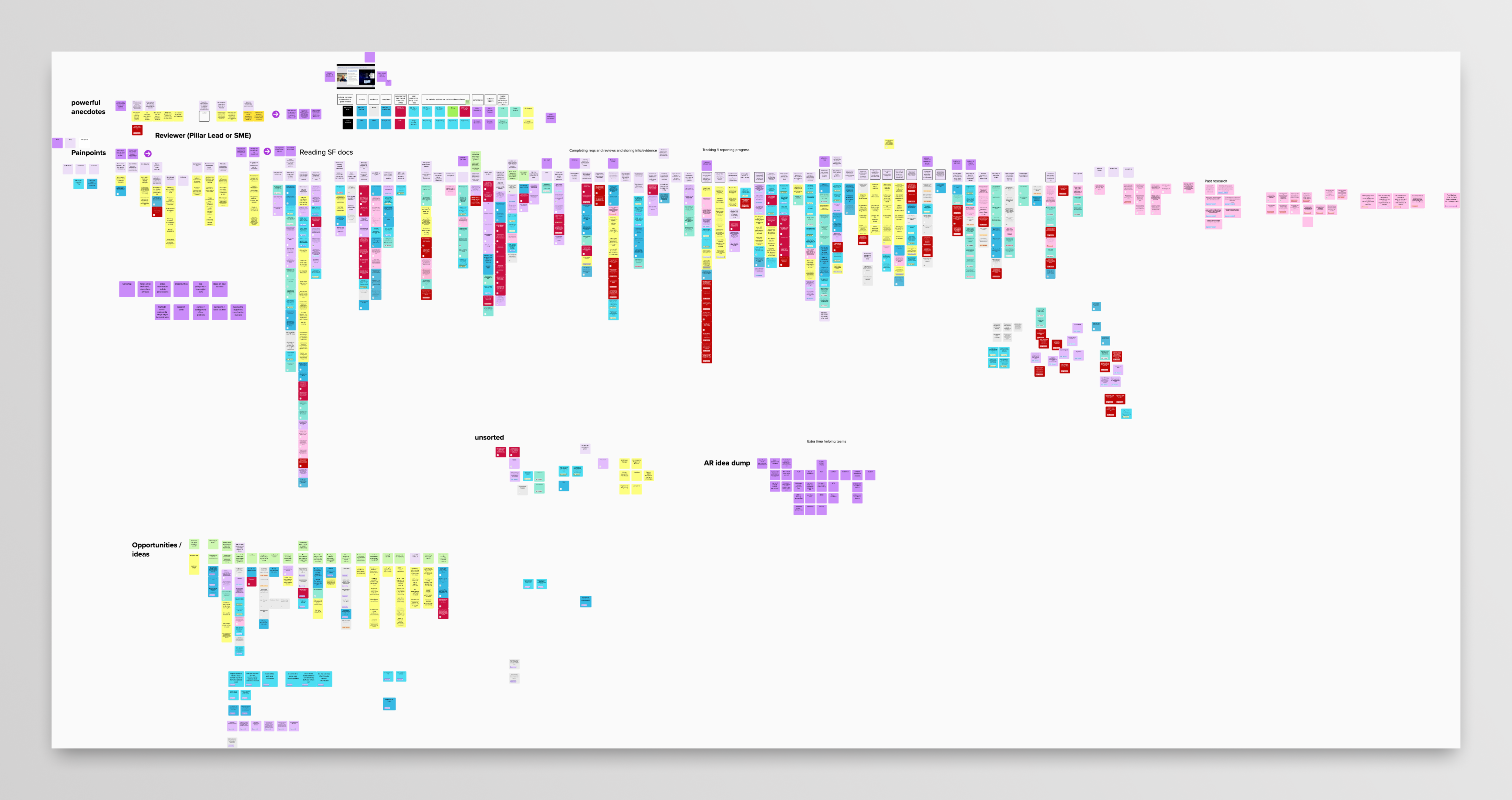
Pain points collected from several workshops and organized along an onboarding journey.
These early discoveries helped me see the real issues were systemic, involving the underlying workflows, data flows, and organizational processes that supported onboarding.
With the current state mapped, I structured the migration in phases. An early milestone was migrating 13 third-party products from RMC to Partner Center — closing the feature and functionality gap between the two tools. From there we progressively expanded scope: enabling new platform services to onboard in the modern tool, then migrating billable services, then professional services, and eventually retiring the legacy tool entirely. I created a Gantt chart to give leadership visibility into the design team’s roadmap and to help sequence the engineering work.
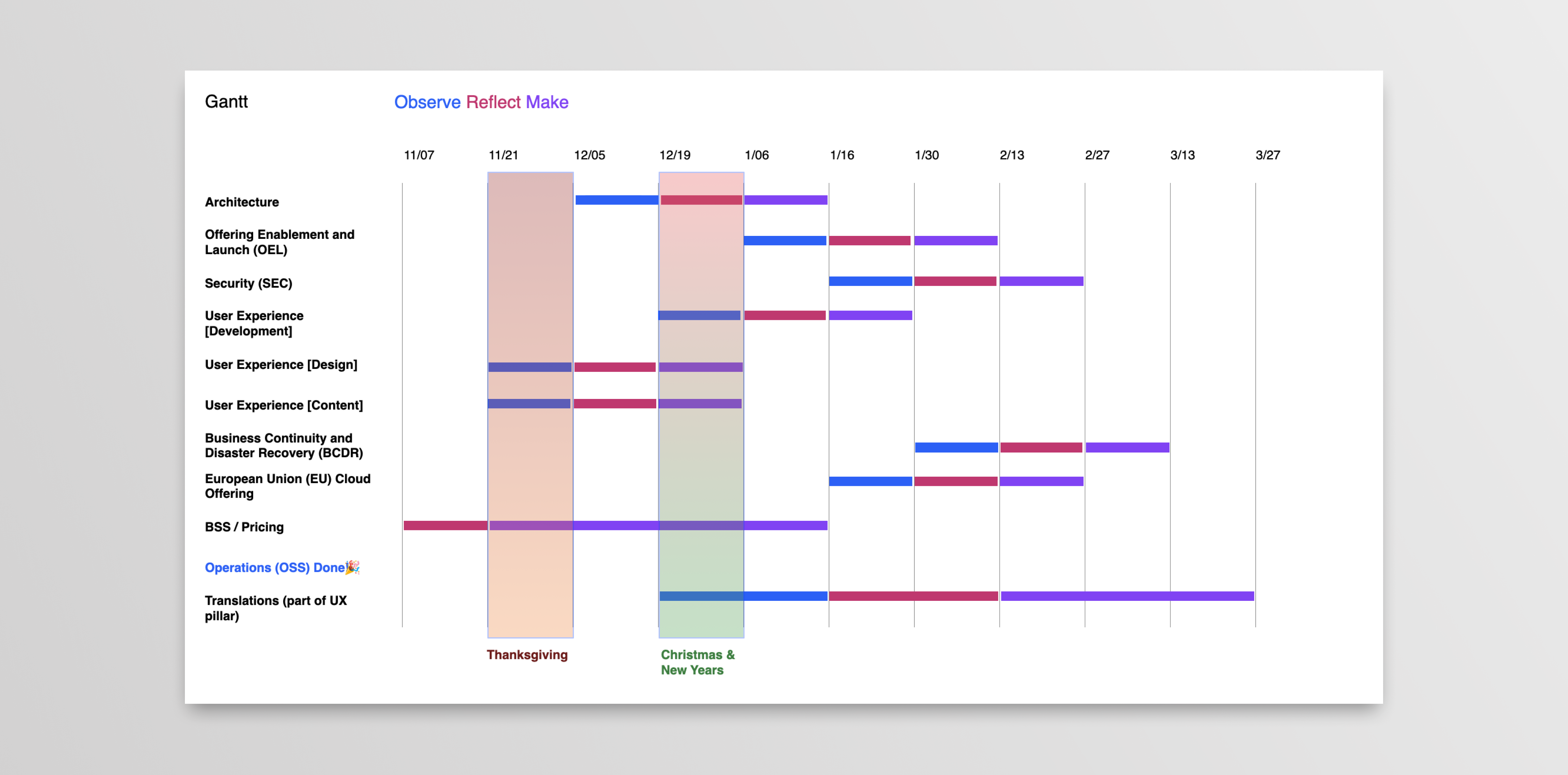
Communicating our design process helped estimate a timeline we could communicate to our stakeholders.
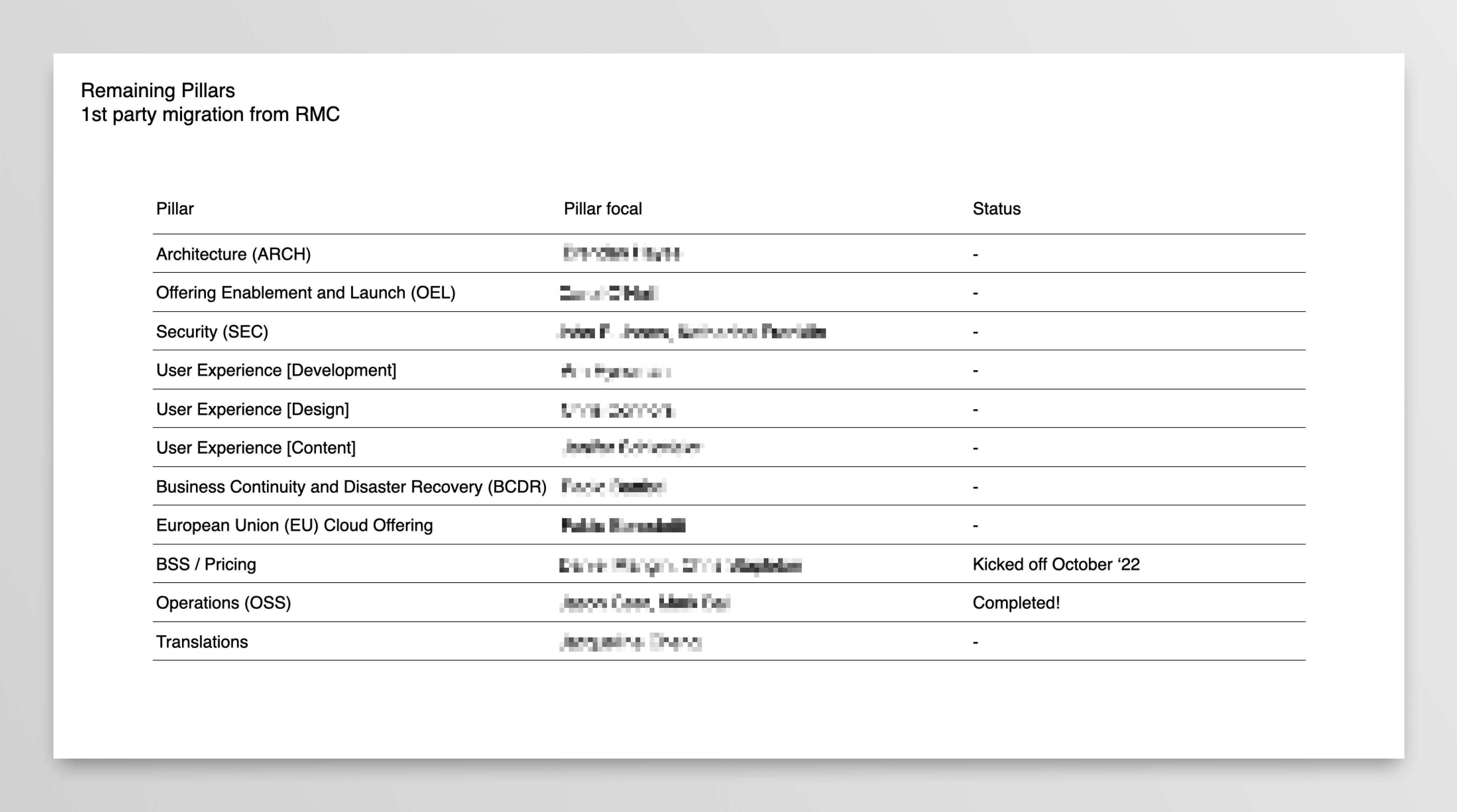
This project had a large number of stakeholders with their own unique pain points and requirements for sign-off.
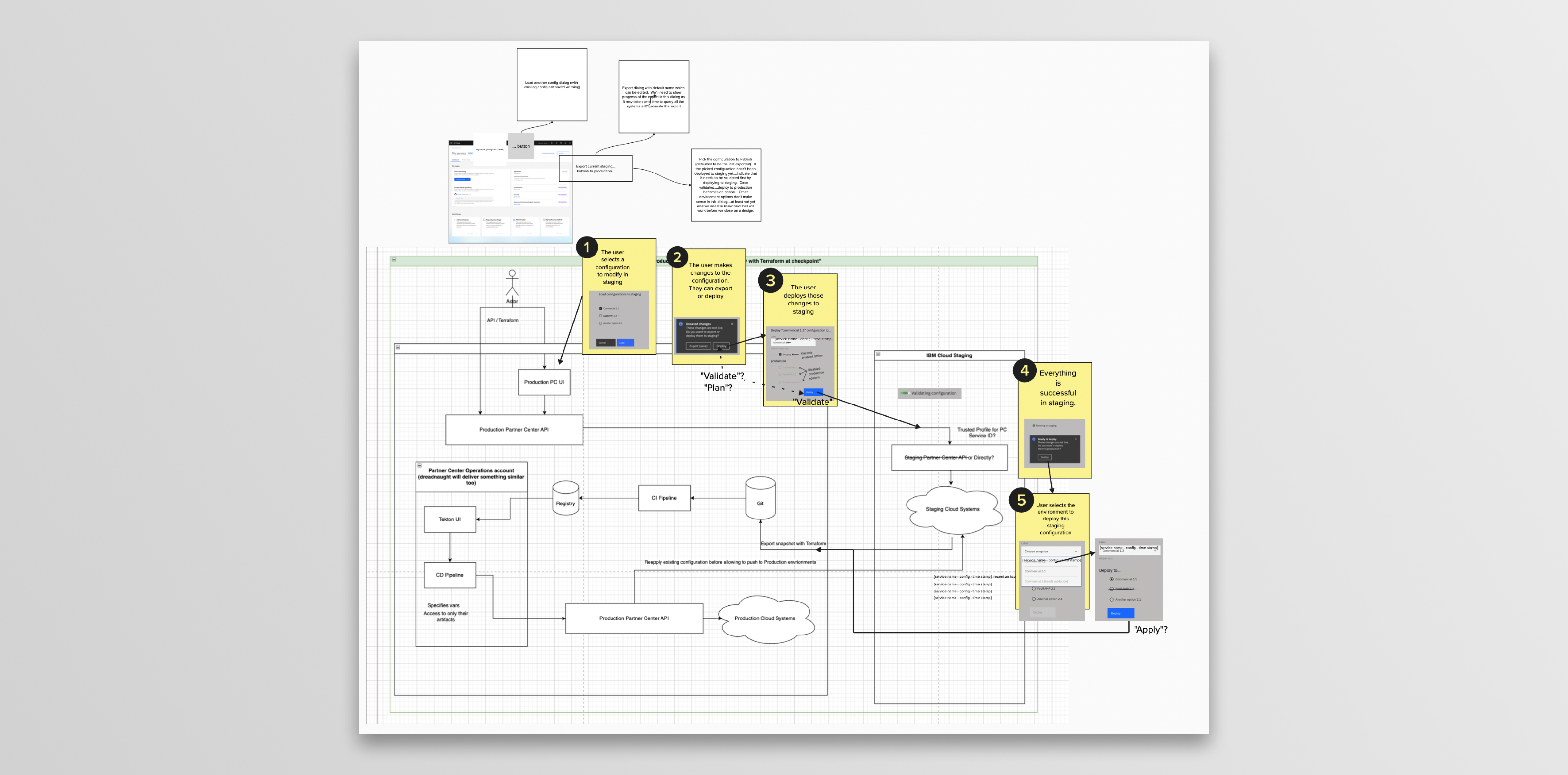
Regular collaborative working sessions allowed us to co-create with our architects and deepen our understanding of the system we were designing.
From there, my design work centered around foundational UX patterns:
The checklist and lifecycle approvals
Users repeatedly told us they struggled to understand their approval status or maturity level. I redesigned the checklist to make system status, remaining work, and required documentation more clear.

Showing progress for each maturity level helped users understand why some approvals were reset. The previous design left users confused when an approval they already received was reset.
Dashboard and navigation
The new dashboard surfaced next steps, blockers, and important system data that was previously buried. The previous information architecture prevented the platform from scaling. I reorganized the experience to support new service types, workflows, and future enhancements. I created the dashboard and navigation utilizing Carbon design system components and following IBM's design language.

Updated dashboard and navigation directing users to incomplete tasks.
To validate the new direction, we created hi-fi prototypes that covered a full range of scenarios. Testing revealed dramatic improvements in clarity and efficiency:
— Release manager, user-testing participant
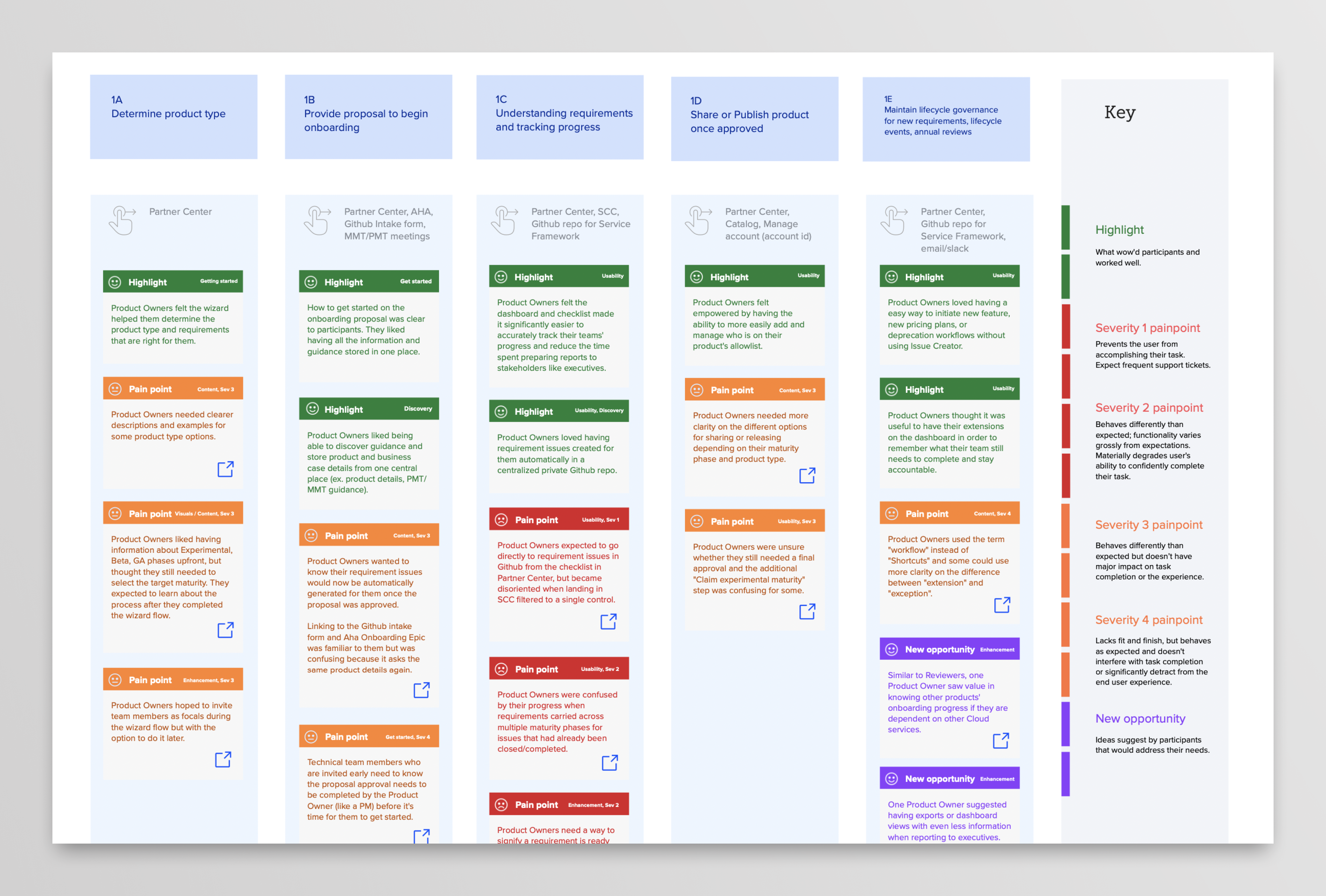
Usability testing was conducted in several rounds with pain points and opportunities being tracked as issues in our team's GitHub repo.
We iterated based on feedback, refined copy and state handling, and resolved edge cases as development progressed. Once the legacy tool was fully retired, the team was finally free to deliver net-new onboarding capabilities without rebuilding them twice.
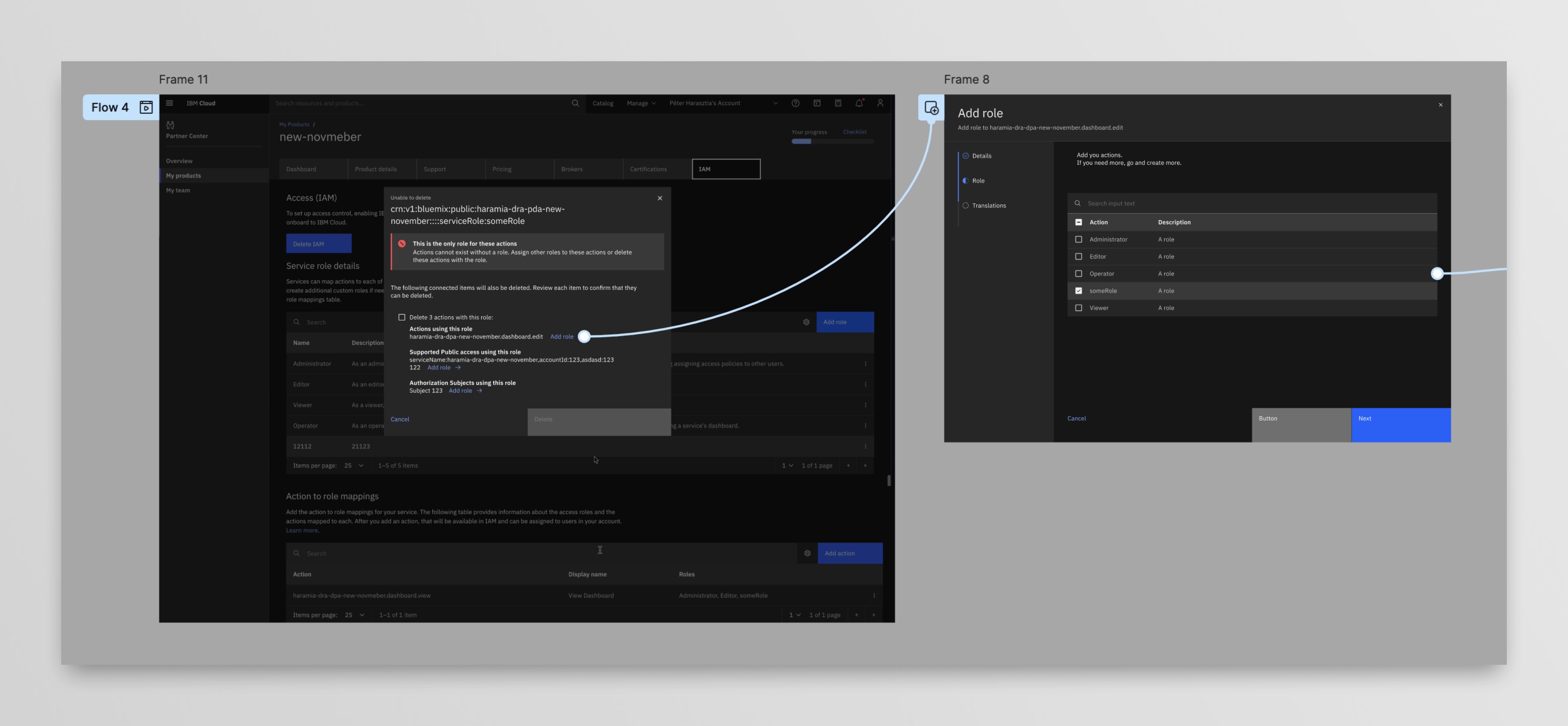
The updated codebase allowed us to quickly ship small usability improvements. For example, fixing an issue where users couldn’t remove a role if it was the only role for an action would have previously required a prohibitively time-intensive change.
The consolidated onboarding experience is now the single path for bringing new platform services to IBM Cloud. Retiring the legacy tool also retired the last remaining workloads on costly infrastructure— unlocking ~$45K in monthly savings for the platform.
Teams now share a single, modern onboarding experience. Moving off legacy infrastructure also improved the platform's compliance posture. Pain points that had persisted for years were finally resolved. And as Partner Center matured, 3rd party ISVs began operating more self-serve — with less reliance on onboarding specialists — contributing to $15M in platform revenue.
One quote captured the shift best:
I think it is truly a quantum leap.”
— Product manager, user-testing participant